


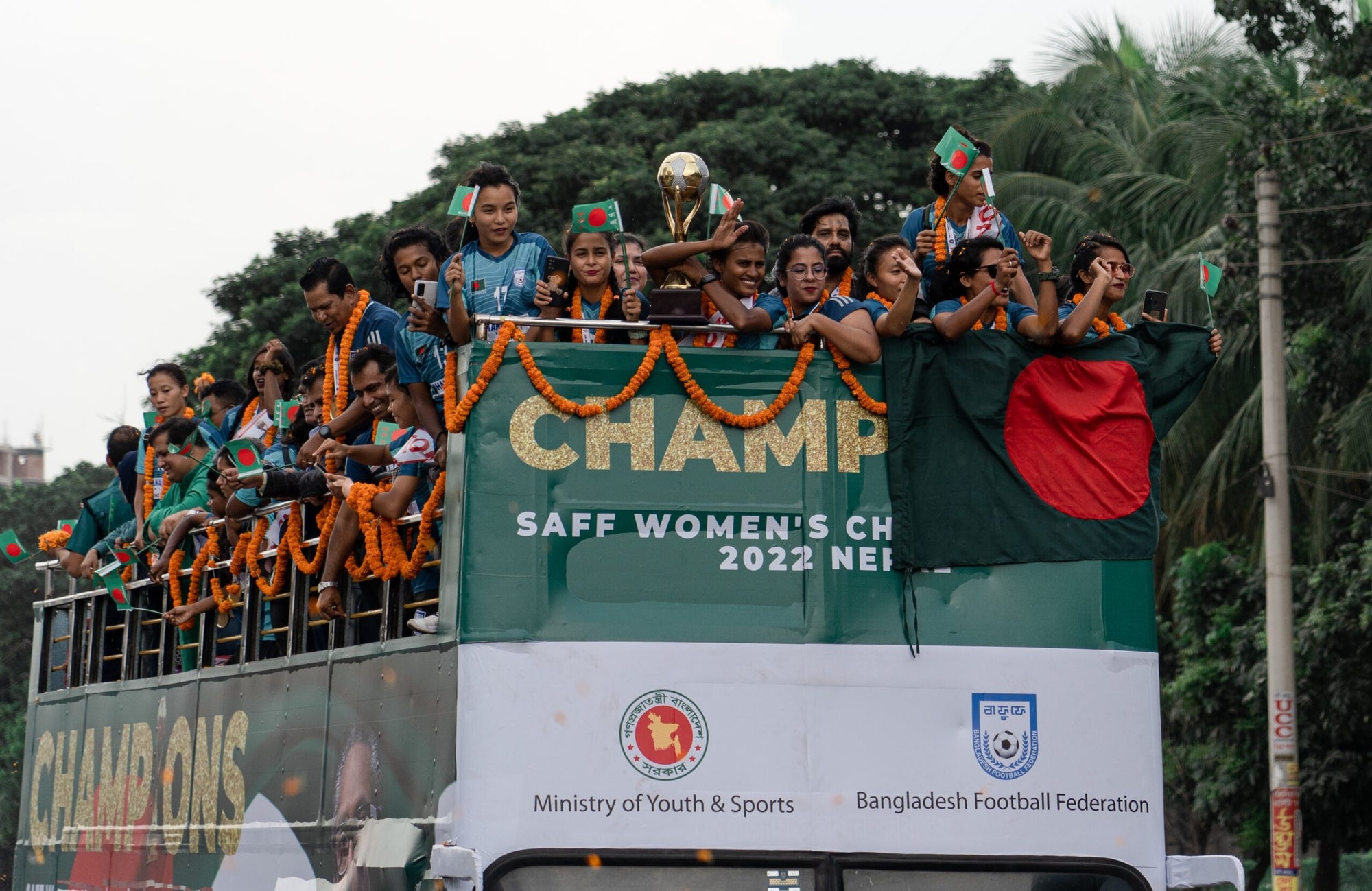
In 2025 Bangladesh’s women's national football team known as the Tigresses achieved what no generation before them had. For the first time, they qualified for the AFC Women’s Asian Cup, marking a turning point for not just the sport, but for the Bangladeshi representation on the global stage [1]. This is not just a sporting milestone it is a story of endurance, pride and generations waiting for their nation’s return to the international field.
1980 to 2026
For 45 years, Bangladesh’s football fans waited for another chance to see their nation represented on a global level. The men’s team qualification in 1980 had remained the only success. Since then multiple generations of players and supporters saw limited progress in football infrastructure, investment and development. The Bangladesh Football Federation stated, “its not just the qualification it's a restoration that Bangladesh belongs in Asia’s top tier” [2].
Road to Qualification
In 2025, the Tigresses were placed in Group C alongside Bahrain, Turkmenistan and Myanmar in the AFC women’s Asian Cup qualifiers [3]. The team dominated in their performance, Bangladesh 7-0 Bahrain, Bangladesh 7-0 Turkmenistan, Bangladesh 2-1 Myanmar.
They finished at the top of the group with 3 wins in 3 matches and a goal difference by additional fifteen points and securing a place in the 2026 Asian Cup. Forward Ritu Porna Chakma became a national hero after scoring both goals in the crucial victory against Myanmar [4].
More Than Football
Tigresses’ Victory is not only historically important to the sport. It represents gender equity, youth empowerment and national pride. Across Bangladesh young women are presented with prominent role models who demonstrate that women have a rightful place on the global platform.
This victory is also long overdue for women's football. In an area that has historically been overshadowed by the men’s league. More importantly, it has rekindled a sense of pride after many years of anticipation. As one sports commentator noted “ This is about rewriting the narrative about women leading the charge where men once did’’ [5].
National Identity
Football has also been deeply ingrained within the cultural framework of Bangladesh. From the rural pitches around Dhaka to the dirt of outside villages where young players dream. Tigresses’ qualification rekindled that relationship with widespread pride and promise for the future. Beyond that the success of the team challenges traditions of gender in sports in Bangladesh which proves that sport can both mirror as well as drive and social change.
The Future
Tigresses will represent Bangladesh in the AFC Women’s Asian Cup 2026 in Australia. Preparations are underway with youth development and international exposure with priority for the BFF. Through concerns like finances, training facilities and institutional backing persist the team qualifying has changed the future of Bangladeshi football. As BBC Sport Asia stated, “Bangladesh’s women’s team didn’t just qualify, they redefined the future of football in South Asia”[6].
References
[1] Asian Football Confederation, “Bangladesh Women's Team Qualify for the 2026 AFC Women’s Asian Cup,” AFC Official Report, 2025
[2] Bangladesh Football Federation, “Press Statement on Women’s Team Qualification," Dhaka, 2025
[3] BBC Sport Asia, Ritu Porna Chakma Leads Bangladesh to Victory,” Jul 2025
[4] Business Standards, "History of Women’s Football: Bangladesh Qualify for the Asian Cup for the First Time,” Feb 2025
[5] Dhaka Tribune, “Bangladesh Women Dominate Asian Cup Qualifiers," Jul 2025
[6] The Daily Star, Bangladesh’s 1980 Asian Cup Team Remembered, “ Sports Archive Feature, 2024