



Khalifatabad
The historic mosque city of Bagerhat is situated at the meeting point of the Ganges and Brahmaptura and was formerly known as Khalifatabad. This city was home to at least 360 mosques, mausoleums, bridges, roads, water tanks and other public buildings credited to Khan Jahan Ali (or Ulugh Khan-i ‘Azam Khan Jahan), an officer of the Bengal Sultanate.[1] These are some of the earliest developments of Islamic architecture in Bangladesh.[2]
Khalifatabad displays the unique Khan-e-Jahan architectural style, which blends the indigenous Bengali style with the imperial style of Delhi. Notable buildings include the Nine-Domed Mosque, whose interior and exterior have been extensively restored, the Ronvijoypur Mosque, which has an 11-meter-wide dome, and Kholda Math, a Hindu pagoda built in the 17th century.[3]
The United Nations Educational, Scientific and Cultural Organisation (UNESCO) recognised the historic mosque city of Bagerhat as a world heritage site in 1985. This applies to the whole city, whose dimensions are approximately 6.5 km (East-West) by 3.5 km (North-South).[4]
Shait Gumad Mosque
One of the first monuments on the Bagerhat-Khulna road, and perhaps the most well-known building in Khalifatabad, is the Shait Gumbad Mosque. Although its name means the ‘60 domed mosque’, this building actually has 81 domes.[5] 77 of these are squat domes, while the remaining seven are chauchalla Bengali domes, four-sided pitched domes innovated by the Khan-e-Jahan architectural style and now typical of Bengali architecture.[6] Not only did Khan Jahan’s building influence Bengali architecture, but it also paid tribute to established features of Bengal’s architecture. For example, the corners between arches are filled with Bengali pendentives,[7] and alternating offset and recessed grooves on the outer walls imitate the framework of the Bengali wood and wattle hut.[8]
The Shait Gumbad Mosque exhibits the distinct style of Khan Jahan. For example, the four corner towers have a circular shape, which singles them out from the other buildings in the region as part of the Khan Jahani group. Two of these towers contain a spiral staircase, leading to the arched chambers, making it likely that these two towers were used for the call to prayer. These four towers are capped by rounded cupolas, in the Delhi Tughlaq style. Similarly, the thick and tapered walls also pay tribute to the Tughlaq style, supporting the theory that Khan Jahan was a noble under the Tughlaq dynasty.
The mosque’s walls are decorated with delicate terracotta patterns, such as lotus flowers, net patterns and rosettes. The architectural layout inside the mosque points to three simultaneous purposes, and it is therefore likely that it served as a place for prayer, an assembly hall, and a madrasa. The mosque, whose construction lasted from 1442 – 1459, forms a 49m x 33m rectangle,[9] making it the largest mosque in Bangladesh that comes from the Bengal Sultanate period (1352-1576).

Khan Jahan’s Mausoleum
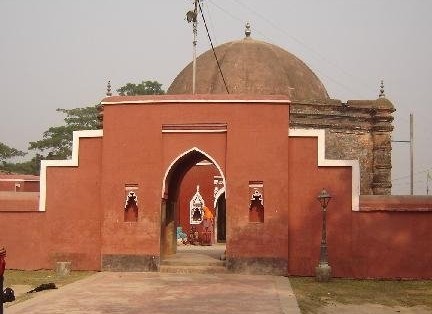
Khan Jahan’s Mausoleum is single-domed, as with most of the buildings in the Khan-e-Jahan style. A second mausoleum is attached to it, which is the tomb of Pir Ali, a close associate of Khan Jahan. Khan Jahan died on 25 October 1459 and was buried in this tomb, commissioned himself. The inscription on his tomb identifies him as ‘Ulugh Khan-i ‘Azam Khan Jahan’, reflecting both his ethnicity (largely thought to be Turkish, though thought by some to be Chagatai Turkish/Uzbek) and his high rank in the Bengal sultanate (the title Khan Jahan Ali was given to him by the Bengal Sultan Nasiruddin Mahmud Shah).
Khan Jahan was responsible for the excavation of countless dighis, but the most famous of these is the Khanjali Dighi, which is the home to the last surviving freshwater crocodiles in Bangladesh. It is said that Khan Jahan arrived in Bengal riding the backs of two crocodiles, and believed that the crocodiles who live there today descend from these very crocodiles. Some also believe that the largest crocodile represents Khan Jahan himself. Visitors seek blessings by touching the crocodiles, drinking the holy water, swimming in the holy water, or offering live animals (such as chickens) to the crocodiles.[10]
After Khan Jahan died, this city slipped into relative obscurity, slowly becoming covered by the same jungle Khan Jahan once cut back. Many of the 15th-century buildings now lie in ruins, largely due to the salinity of the area in which they were built, combined with the decision to build them at ground level, meaning that they consistently sit saturated with salt water.[11] A complex system of rainwater disposal at Khan Jahan’s mausoleum indicates that its architects were aware of these factors of climate, and justify why the mausoleum remains in comparatively good shape.
Khan Jahan
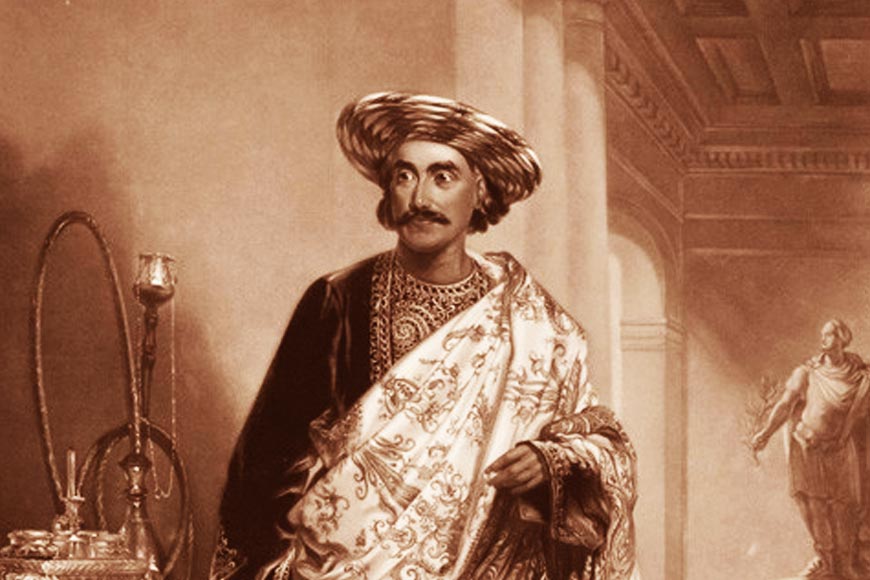
Khan Jahan acquired Bagerhat, in Khulna, as jagir/a gift from the sultan of Delhi (and later, from the sultan of Bengal). He cleared the jungle region of the Sundarbans to create space for cultivating rice, dug water tanks for clean water storage, and embanked the streams to keep salt water out. He is also thought to have been involved in the building of several mosques in Barobazar before moving to Khalifatabad, and other mosques in and around Khulna have been attributed to him or his disciples.
Although little is known about Khan Jahan’s biography, it is thought that he was a noble under the Tughlaq dynasty,[12] who came to Bengal just after the sack of Delhi, led by Timur in 1398.[13] The name on his tomb, ‘Ulugh’, suggests his Turkish origin. Both through military invasions and trade connections, the Turks had been bringing Islam to Bengal since the eleventh century. The colonisation of Bengal by Turkish Muslims started with the advent of Ibn Bakhtyar Khalji, who established a short-lived Khalji dynasty in Bengal (1203-1227).
Khan Jahan was a practitioner of Sufism and is ascribed with converting the citizens of Jessore and Khulna to Islam. It is thought that Khan Jahan converted the locals through his works of public utility and humanitarian works, such as the digging of tanks and building of roads. However, Chowdhury highlights that Khan Jahan was a controversial figure, and argues that some of the monuments built by Muslims were in fact reclaimed monuments e.g. ‘the Kali Khalas Dighi of the village Bedkashi of Khulna district. This tank was attached to a famous Kali temple. Khalas Khan, a Muslim general, took possession of the temple and also of the tank. He gave it the name of Khalas Khan tank’.
References
[1] ‘Khan Jahan Ali adorned his capital city with numerous mosques … But the present-day Bagerhat can be distinguished by about fifty monuments and ponds’
[2] https://whc.unesco.org/en/list/321
[3] Leung and Meggitt (2009)
[4] https://www.thedailystar.net/in-focus/news/trails-khan-jahan-ali-1790449
[5] It is thought that the building’s original name was 'Shat Khumbaz', or ‘sixty pillars’, and that this name was later corrupted to give the popular name of 'Shatgumbad'
[6] Mowla and Naqi (1993)
[7] a triangular segment of a curved surface, formed by the intersection of a dome and its supporting arches and serving to support the dome
[8] https://en.banglapedia.org/index.php?title=Shatgumbad_Mosque
[9] Elsewhere listed as 45 by 31 metres
[10] https://www.sarakuehn.com/marsh-crocodiles-at-khan-jahan-ali-in-bagerhat-kulna-southwest-bangladesh
[11] Mowla and Naqi (1993)
[12] Tughlaqs: Indo-Turkic dynasty 1320 – 1413
[13] https://en.banglapedia.org/index.php?title=Khan_Jahan
Bibliography
Chowdhury, M. L. Roy; Preaching of Islam in Bengal (Turko-Afghan Period) (1960)
Eaton, Richard Maxwell; The Rise of Islam and The Bengal Frontier, 1204-1760 (1993)
Leung, Mikey; Meggitt, Belinda; Bangladesh: Bradt Travel Guides (2009)
Mowla, Qazi A.; Naqi, Muhammad Ali; An Appraisal of Khan-e -Jahan Style in Architecture (1993)
https://whc.unesco.org/en/list/321 [accessed 04.07.2025]
https://www.thedailystar.net/in-focus/news/trails-khan-jahan-ali-1790449 [accessed 04.07.2025]
https://en.banglapedia.org/index.php?title=Khan_Jahan [accessed 04.07.2025]
https://www.thedailystar.net/star-weekend/heritage/the-shrine-the-dighi-1205707 [accessed 04.07.2025]
https://en.banglapedia.org/index.php?title=Shatgumbad_Mosque [accessed 07.07.2025]
https://www.sarakuehn.com/marsh-crocodiles-at-khan-jahan-ali-in-bagerhat-kulna-southwest-bangladesh [accessed 07.07.2025]