

Mughlai Paratha
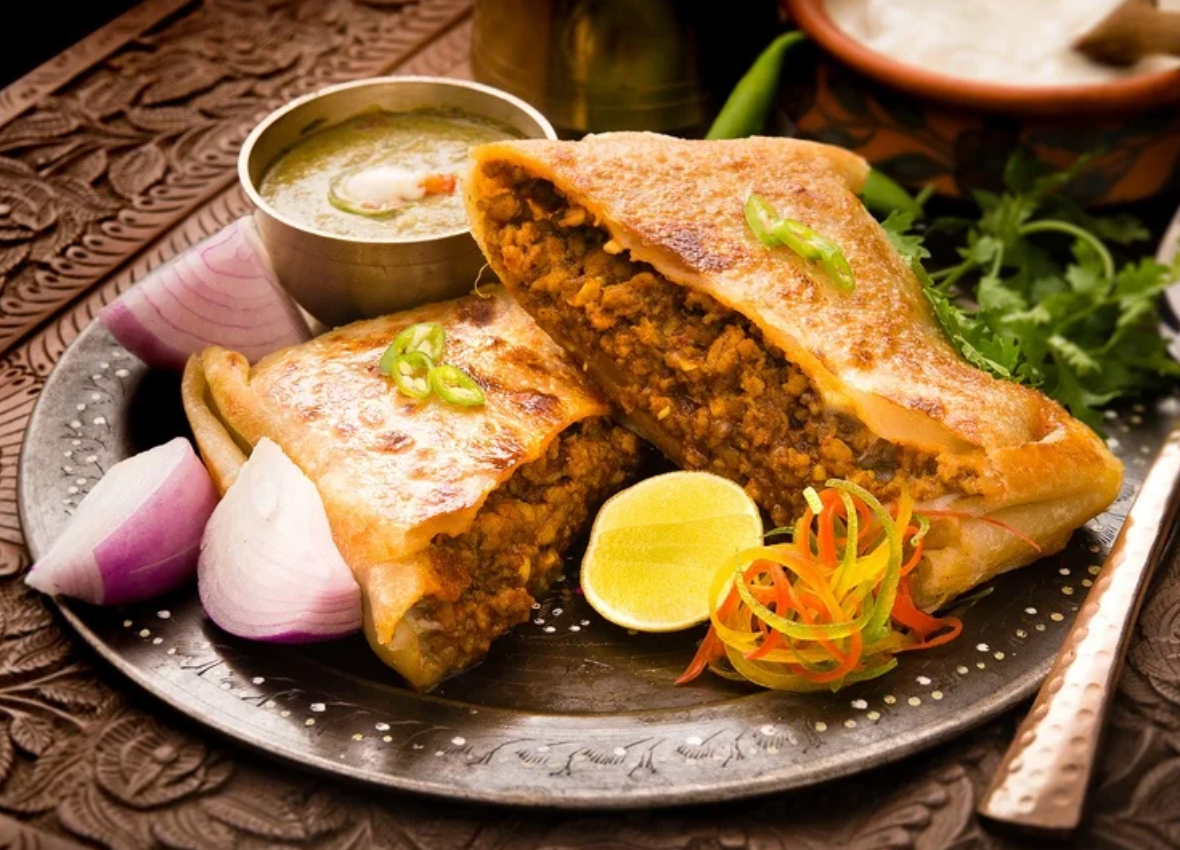
Picture this: it's a cloudy day, your body is hungry as you walk down the streets of Dhaka. You look for something to eat at one of the food stalls. Your eyelids start to droop but the smell of oil and spice wakes you up. You take your pick: crispy flaky top, with a soft interior filled with delicate bits of filling and strong flavourful spices. You ask the man with the hot griddle what it is. He tells you it's Mughlai paratha, a dish special to its historical roots and a multitude of influences.
History
Under Mughal governance, the expansion of Muslim culinary traditions resulted in a variety of dishes being introduced to Bangladesh, such as biriyanis, pulaos, and paratha.[1] Mughlai paratha is one such dish.
Mughlai or Moghlai refers to food that originated in the imperial kitchens of the Mughal Empire, strongly influenced by Persian cuisine.[2] The word partha composed of the Sanskrit word parat (meaning "layer") and atta (meaning "flour"), together describe a flatbread made up from layers of cooked flour.[3] The difference between Mughlai paratha and the ordinary paratha lies in their preparation and richness. While Mughlai paratha is stuffed and fried, paratha is typically lighter and more versatile; a staple in everyday south Asian cuisine.
The dish is thought to have been created during the reign of the Mughal emperor Jahangir (1569-1627), however, it is believed that the Turkish gözleme might have been a precursor to Mughlai paratha.
Gözleme is a traditional Turkish flatbread, most likely originating from Turkic nomadic tribes from many centuries ago. However, there is evidence of it being made in palace kitchens as early as the 15th century. Dough is rolled until thin, filled with toppings like feta and spinach, minced beef, and other combinations, then brushed with oil and cooked on the grill.[4]
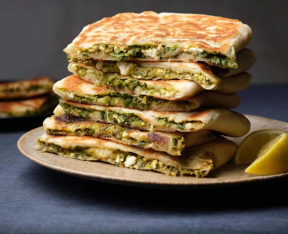
With Turk-Afghan influence being present in the region nearly three centuries prior to the reign of Jahangir in 1205, this seems plausible.[5]
It's said that the emperor had grown tired of eating plain and simple keema parathas and wanted something new. Jahangir had requested his cook, Adil Hafiz Usman, to make him a new dish in ten days' time. On the ninth day, Usman served him zabir fala or anda roti, later becoming known as Mughlai paratha. Usman was gifted 1001 gold coins and a jagir (a type of feudal land grant) by the emperor's delight. Usman had come from Bardhhaman in West Bengal and kept the recipe strictly within his family—keeping it a secret from other cooks in Old Delhi and Lucknow, advising his son to do the same. The recipe was kept a secret for generations until their descendants eventually began selling the dish across Bengal during the British Raj.[6]
These Mughal influences had a stronger impact on Dhaka than rural Bangladesh, resulting in the city's cuisine being less spicy and not as rich in oil.[7] While it's not exactly certain how Mughlai paratha travelled to Kolkata, it remains a popular dish in the city and across south Asia.[8]
How It's Served

Mughlai paratha can be prepared in a variety of ways, with non- vegetarian and vegetarian ways reflecting the diets of local communities. The classic egg paratha is enjoyed by all and can be mixed with keema—a spiced minced meat—for a heartier meal. Paneer paratha is a vegetarian option that includes bits of paneer mixed with vegetables and seasoned to taste. Chicken paratha is also a popular flavour that is sought out for. Minced chicken meat seasoned with spices makes its way into the layered dough, with a taste that is rich and filling. Typically, a refreshing dip of some kind is served with it to cut through the indulgent taste.
Mughlai paratha is best served after it's been deep fried, typically cut into squares or diagonal slices and can be eaten by itself or with a side. Common condiments include thinly sliced onions, green chilies, a tangy ketchup, cucumbers, and potato curry (or aloo sabji).
The dish is most often enjoyed during festive times like Ramadan and Durga Puja. Although Mughlai paratha is just as enjoyable any day of the year with friends and family.
References
[1] Banerji, Chitrita. Life and Food in Bengal. 1991.
[2] Wiktionary "Mughlai" https://en.wiktionary.org/wiki/Mughlai
[3] Verma, Neera. Mughlai Cook Book.
[4] Yasa, Dilvin. "Gozleme: a love story." 4 September 2023, https://www.sbs.com.au/food/article/gozleme-a-love-story/neunc4nkh
[5] Get Bengal. "Was it the British who named Kolkata's favourite Mughlai paratha?" 10 July 2020, https://www.getbengal.com/details/was-it-the-british-who-named-kolkatas-favourite-mughlai-paratha
[6] Get Bengal. "Was it the British who named Kolkata's favourite Mughlai paratha?" 10 July 2020, https://www.getbengal.com/details/was-it-the-british-who-named-kolkatas-favourite-mughlai-paratha
[7] Janeja, Manpreet. Transactions in Taste: The Collaborative Lives of Everyday Bengali Food. 2010.
[8] Karmakar, Kalyan. "The mysterious story of Kolkata's Moghlai Paratha." 13 May 2016, https://finelychopped.net/the-mysterious-story-of-kolkatas-moghlai-paratha/