


Khona is a name that has been echoing in Bengali households from generation to generation from ancient times, yet the identity of Khona remains an enduring enigma. Who Khona was and who wrote Khona’s Bochon still remains a mystery lost from the letters of history, but that has not suppressed her fame nor stopped the widespread recognition of her sayings.
Khona
Who Is Khona?
Khona is a prominent ancient figure in Bangladesh and India (mostly in West Bengal, Assam, Bihar, and Odisha), as well as in Nepal and Tibet. Khona’s ‘bochon’ or parables remain widely circulated and accepted in these regions.
There are many legends about Khona, and her identity is not documented in any written form, which even raises questions about her existence. To understand Khona, scholars depend on the legends that persist today. And considering these traditional stories, some came to the conclusion that there was a person named Khona.
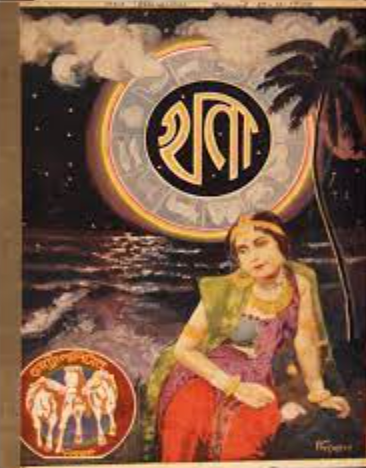
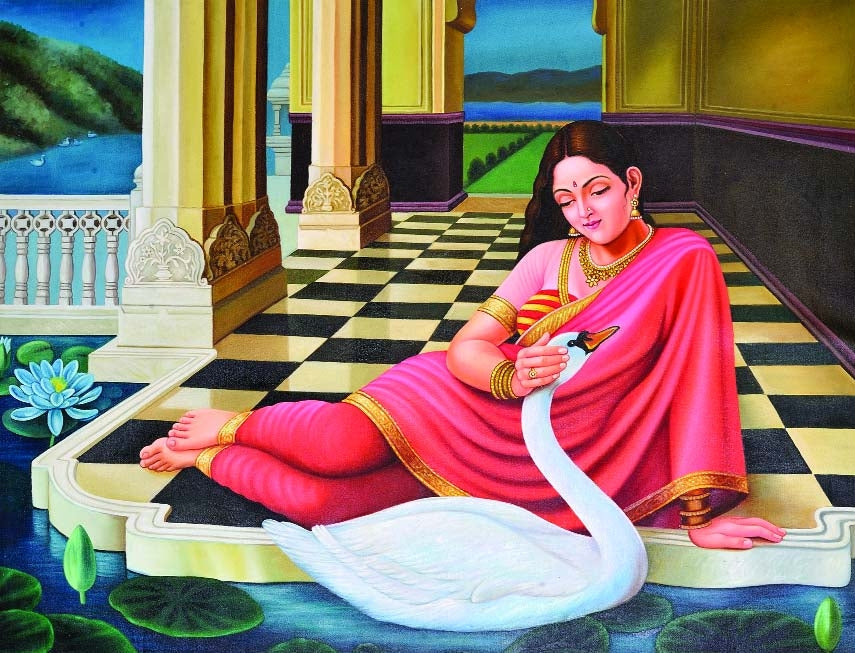
According to general belief, Khona was a female poet, astrologer, and mathematician. Since all her agro-based parables are rooted in the agricultural life of Bengal, it is strongly believed that she was Bengali. All of the legends about Khona identify her as a female astrologer, and the absence of anti-feminist parables indicates that Khona was a female poet. [1]
It is said Khona’s real name was Lilaboti. Some Bengali sayings suggest she was named Khona because she was born at an auspicious moment, or ‘khon.’ Some pundits say her name comes from her parables being related to time, or ‘khon’. Another legend from Odisha claims that she was named Khona (which means ‘mute’ in Odia) after becoming mute. According to another saying, she was named Khona as her voice became hoarse or ‘khonkhone’.
Legends about Khona’s birth and early life vary, but the stories of her work, marriage, and death consistently converge. They reveal how people perceived her wisdom, shaping her identity beyond mere facts. Exploring the myths and legends about her becomes important to understand Khona.
Khona-Mihir's Dhibi: Tracing a Legend in West Bengal
One of the most enduring legends places Khona right in West Bengal. It is believed that she lived in the village of Deuli, in the Barasat region. She was known as the daughter of a scholar named Atanacharya and lived during the time of a local king, Dharmaketu of Chandraketugarh. In one of Khona’s parables she is found saying, ‘আমি অটনাচার্যের বেটি, গনা-বাছায় কারে বা আঁটি’, which means ‘I am the daughter of Atanacharya. In mathematics and astrology I am second to none’. [2]
To this day, locals point to ancient ruins near Barasat, claiming they are remnants from her era. A particular high spot is even called ‘Khana-Mihir's Dhibi’, which is said to be the very mound where Khona and her husband’s home once stood or where they were laid to rest. This site draws many visitors since some historians suggest that the ruins are possibly from the Gupta period (320-550 CE). [3]
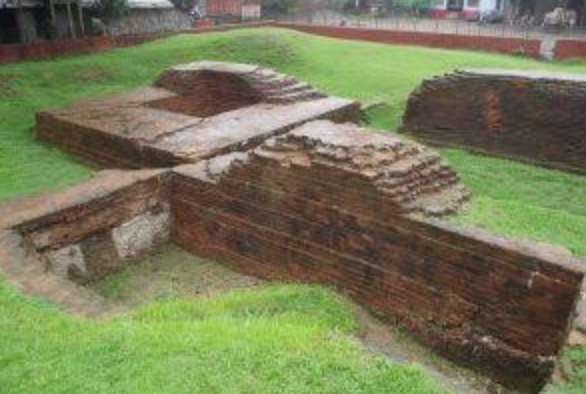
Khona-Mihir Dhibi
The Princess from Sinhala
According to another myth Khona was actually a Princess of Sinhala (contemporary Sri Lanka) whose name was Lilavati. She became the wife of Mihir, a son of an astrologer Varaha from Ujjain. Varaha was a famous astrologer and after foreseeing his son would die young, he set baby Mihir adrift at sea. The king of Sinhalese rescued and brought up the infant. Mihir was married to the Sinhalese princess Lilavati. [4]
The Child of the So-Called Demons
A more mythical legend suggests that demons took over Sinhala and killed the king and queen. But they spared their daughter, Princess Lilavati and brought her up in Lanka. These demons also came across a baby boy, Mihir, who was lying in a pot on the water. Mihir was Varaha’s son, whom he had abandoned as he predicted that Mihir would not live longer. The demons saved Mihir. Khona and Mihir got married, and later they went to Mihir’s ancestral home. When they found Varah, Khona proved that he had made a wrong calculation about Mihir’s life, and Varah happily accepted his son and daughter-in-law. [5]

Several scholars provide a radical reading of this story: these ‘demons’ or ‘Rakshasas’ were not imaginary evil characters, but probably the aboriginal people of Bengal who were frequently given this label by their neighbors. This would imply that Khona and Mihir were not born and brought up in Sri Lanka, but were raised by a local tribal community in Bengal. [6]
Tracing Khona Through Her Marriage
The society of ancient times, which was patriarchal in nature, may have been the reason for the lack of records about Khona's life. Therefore, the historians had to depend on the study of the language of her parables and the family relationships to reconstruct her story.
The strongest evidence for Khona's existence comes from her marriage to Mihir. Mihir was the son of the well-documented astrologer Varahamihira (505–587 CE). This connection suggests she lived in the 6th century. This timeline is also supported by her agricultural parables, which describe farming methods common before the 7th century. [7]
Although some legends blur Mihir and Varahamihira as the same person, most accounts treat them as father and son. Both of them served in King Vikramaditya's court. Most convincingly, Khona’s own verses name Mihir as her husband and Varah as her father-in-law. This direct reference in her poetry gives the clearest proof of who she really was.
Khona's Work and Legacy
Khona is known for her profound knowledge of agriculture and her amazing talent in astrology. According to some legends, she was also a mathematician. Her sensible and practical wisdom of weather predictions and planting techniques, which is in the bochons (parables), was a direct way of helping farmers to grow crops. For example, she advised that if the moon on the second day after the new moon is high in the north and low in the south, it indicates suitable rainfall for rice cultivation (অমাবস্যার পরে দ্বিতীয়ার চাঁদ উত্তর দিকে উঁচু ও দক্ষিণ নীচু হলে ধান চাষের উপযুক্ত বৃষ্টিপাত হয়). যদি বর্ষে মাঘের শেষ, ধন্যি রাজা পুণ্যি দেশ, meaning ‘If it rains at the end of the Bengali month of Magh (the last month of winter), the kingdom will prosper (indicating good crops and favorable conditions for the year)’ is also notable.
News of her skills reached the palace of King Vikramaditya. It is said that when the court scholars led by astrologer Varah, and his son Mihir could not answer how many stars were in the sky, Khona came up with the right answer. She was also very accurate in calculating planetary positions, days, and dates, thereby showing that she had more knowledge than the other scholars in the court. The story goes that, on being overwhelmed with her talent, King Vikramaditya was thinking of appointing Khona as his 10th Jewel. [8]
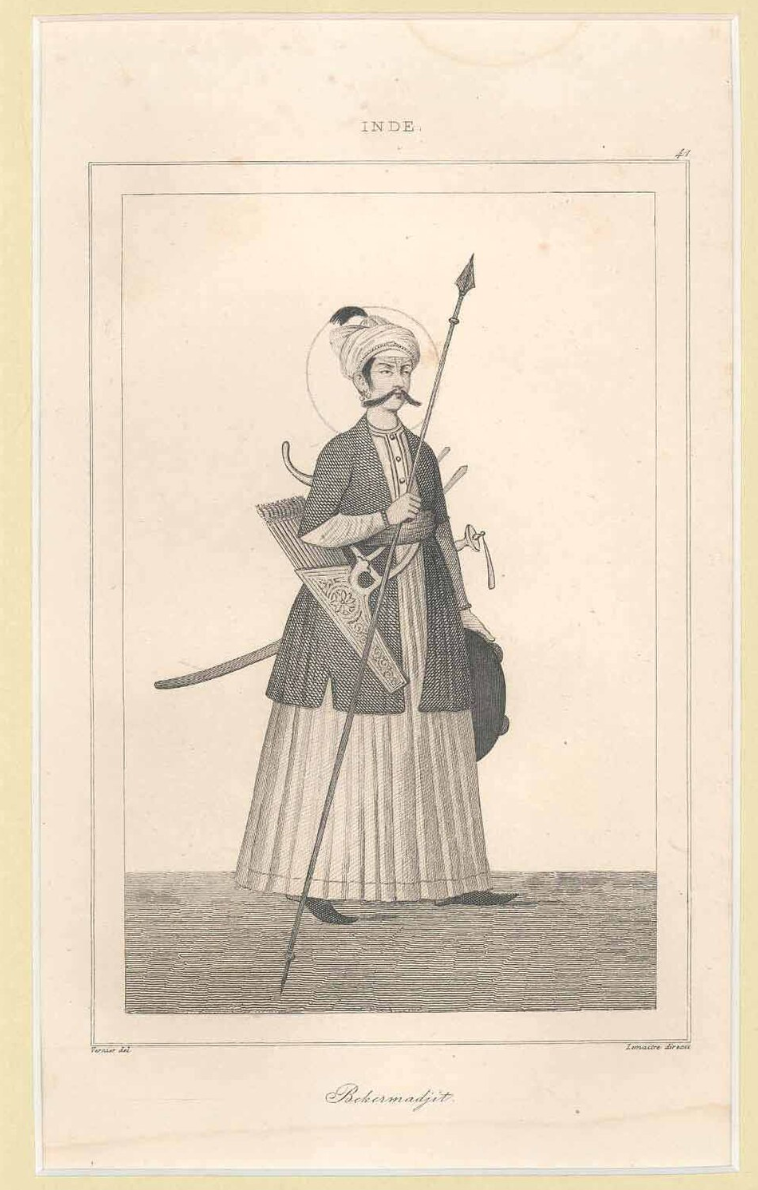
Although she is not traditionally acknowledged in historical documents of that time, through the widespread distribution of her bochons, which are not only a monument of her incredible practical genius but also her lasting impact on Bengali agricultural life and folk tradition, her memory is still alive.
The Tragic Death of Khona
The most heartbreaking part of Khona's story is her death.
Legend has it that her father-in-law, the astrologer Varah, became very jealous of her knowledge and the power she had in King Vikramaditya's court. Varah was afraid that Khona would be more famous than him and cut off Khona’s tongue. [9] Some legends suggest that Varah ordered his son to cut Khona’s tongue and Mihir obeyed his father’s order.
Another popular version of this incident refers that King Vikramaditya ordered Khona's tongue to be cut out after she made an unfavorable prediction about an upcoming war. When the king asked her to foresee the outcome, Khona truthfully declared that he would be defeated. This honest prophecy, which challenged the king's authority and hopes for victory, led to her brutal silencing.
Khona is said either to have died from bleeding or to have been totally silenced.
Scholars try to understand Khona's silencing in many ways. Some see this incident as a class conflict where Khona, as the representative of the peasants, was silenced by Varah and Mihir, who represented the monarchy's interests.
The other argument is based on the caste system. The Ramayana, for example, depicts severe punishments for Shudras who chant Vedas. As a non-Brahmin woman sharing sacred knowledge with common farmers, Khona was breaking the caste system. Her doing so threatened the caste pride of her Brahmin family, and as a result, she was silenced as a punishment. [10]
Many label this as a stereotypical case of patriarchal violence. Khona was a smart and loud woman in a society where men had the power. Her husband and father-in-law, as the representatives of this patriarchy, made her silent in order to suppress her voice and show their power. One of the ways that was used to get rid of women's voices when knowledge was mostly passed down orally was by literally cutting the tongue of a rebellious woman. [11]
Khona’s Bochon or Parables of Khona
Writers, Number, and Timeframe
Although Khona is credited as the originator of the famous parables, scholars suggest that many anonymous poets contributed to the collection we know today. This is partly because ancient Bengali poets often attributed their work to famous figures rather than using their own names. The number of Khona’s parables can be near one hundred and fifty thousand. The exact number of contributors remains unknown, as does the total number of parables.
Scholars have also struggled to pinpoint the era of these sayings. Some argue they originated between 800-1100 CE, while others propose a start date as early as the 7th century. Because Khona's sayings were preserved orally and not in written form, storytellers and orators altered words and added new ones over time. This process gave ‘Khona's Bochon’ a newer look with each retelling, making its original timeframe difficult to trace. Consequently, there is no definitive conclusion about its precise period of origin. [12]

Lack of Documentation
The tragic silencing of Khona suggests her wisdom was shared through speech, not writing. Had she been recording her knowledge, her opponents might have cut off her fingers instead of her tongue. Another possibility remains that any written works she produced were systematically destroyed.
This would explain why only her spoken sayings survived. The farmers and common people who benefited from her practical advice, likely unable to read or write themselves, became the guardians of her legacy. They memorized her parables and passed them orally from generation to generation, keeping Khona’s voice alive long after she was silenced.
Context of Khona’s Bochon
Khona's poems were mostly about agriculture, weather, health, and astrology. Khona shared timeless wisdom that interconnected farming and astrology, health and habits, and practical knowledge and nature's cycles.
Her most detailed advice was on rice cultivation, which she valued more than gold. One of the Khona’s parables go as: ‘ধান ধন বড় ধন, আর ধন নাই। সোনা রুপা কিছু কিছু আর সব ছাই’ which means ‘rice is the greatest wealth; there is no other wealth. Gold and silver are worth something, but everything else is nothing’.
Her sayings also incorporate information on other important crops like banana, turmeric, coconut, betel nut, bamboo, and different gourds. She provided suggestions on cattle rearing, especially cows. Parables like ‘কলা রুয়ে না কেটো পাত, তাতেই কাপড় তাতেই ভাত’ (It suggests after harvesting the bananas, the banana bunches should be cut carefully so that the base of the banana plant is not uprooted. In other words, the plant should be cut in a way that does not damage the part under the soil. As a result, a single planted banana plant continues to grow bananas throughout the year. This provides the farmer with crops all year round, which ensures his supply of food and livelihood.) or ‘ষোল চাষে মূলা, তার অর্ধেক তুলা, তার অর্ধেক ধান, বিনা চাষে পান’ (This means that for good yield, radish should be cultivated 16 times, cotton 8 times, rice 4 times, and betel leaves do not require any cultivation. Essentially, it indicates how many times the land should be ploughed or tilled for farming).These are still relevant to farming today.
The parables included health and nutrition information that was surprisingly scientific for the time. While people believe in superstitious cures to this date, Khona's bochons were mostly scientific and ahead of her time. When the world is considering a balanced lifestyle today for a healthy life, Khona suggested that hundreds of years ago. She insisted on having a clean environment and a balanced diet and lifestyle to prevent diseases and maintain good health. The lifestyle advice is still ratified by many Bengali households.
References
https://sopnokotha.com/khona-the-timeless-myth-of-wisdom/
https://thenewhistoria.org/schema/khona/
https://www.kalerkantho.com/online/science/2024/03/08/1369847
https://www.thedailystar.net/life-living/news/khona-the-historical-figure-the-gift-prophecy-3022126
বসু পূরবী, কিংবদন্তির খনা ও খনার বচন (২০১৫)
[1] https://thenewhistoria.org/schema/khona/
[3] https://www.kalerkantho.com/online/science/2024/03/08/1369847
[4] https://sopnokotha.com/khona-the-timeless-myth-of-wisdom/
[5] বসু পূরবী, কিংবদন্তির খনা ও খনার বচন (২০১৫)
[6] বসু পূরবী, কিংবদন্তির খনা ও খনার বচন (২০১৫)
[7] বসু পূরবী, কিংবদন্তির খনা ও খনার বচন (২০১৫)
[9] https://thenewhistoria.org/schema/khona/
[10] বসু পূরবী, কিংবদন্তির খনা ও খনার বচন (২০১৫)
[11] https://www.thedailystar.net/life-living/news/khona-the-historical-figure-the-gift-prophecy-3022126
[12] বসু পূরবী, কিংবদন্তির খনা ও খনার বচন (২০১৫)
Thumbnail: https://dailyasianage.com/news/310266/khonas-parables-are-still-relevant-to-bengali-folklore