


Woven Flowers in the Mist
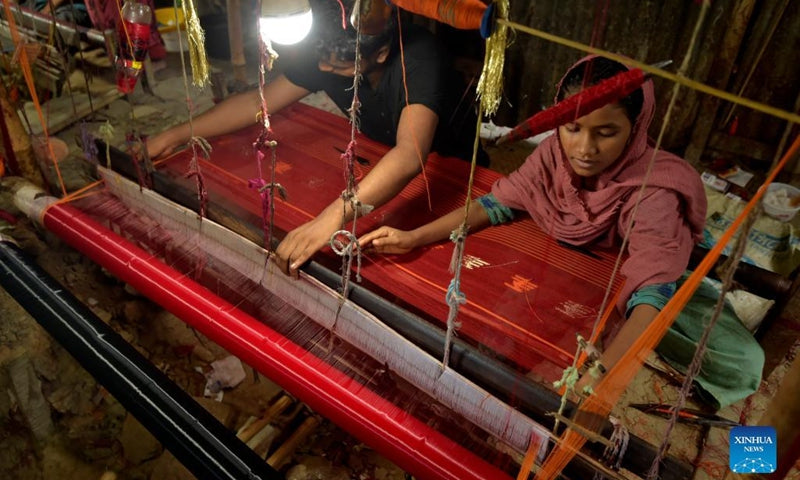
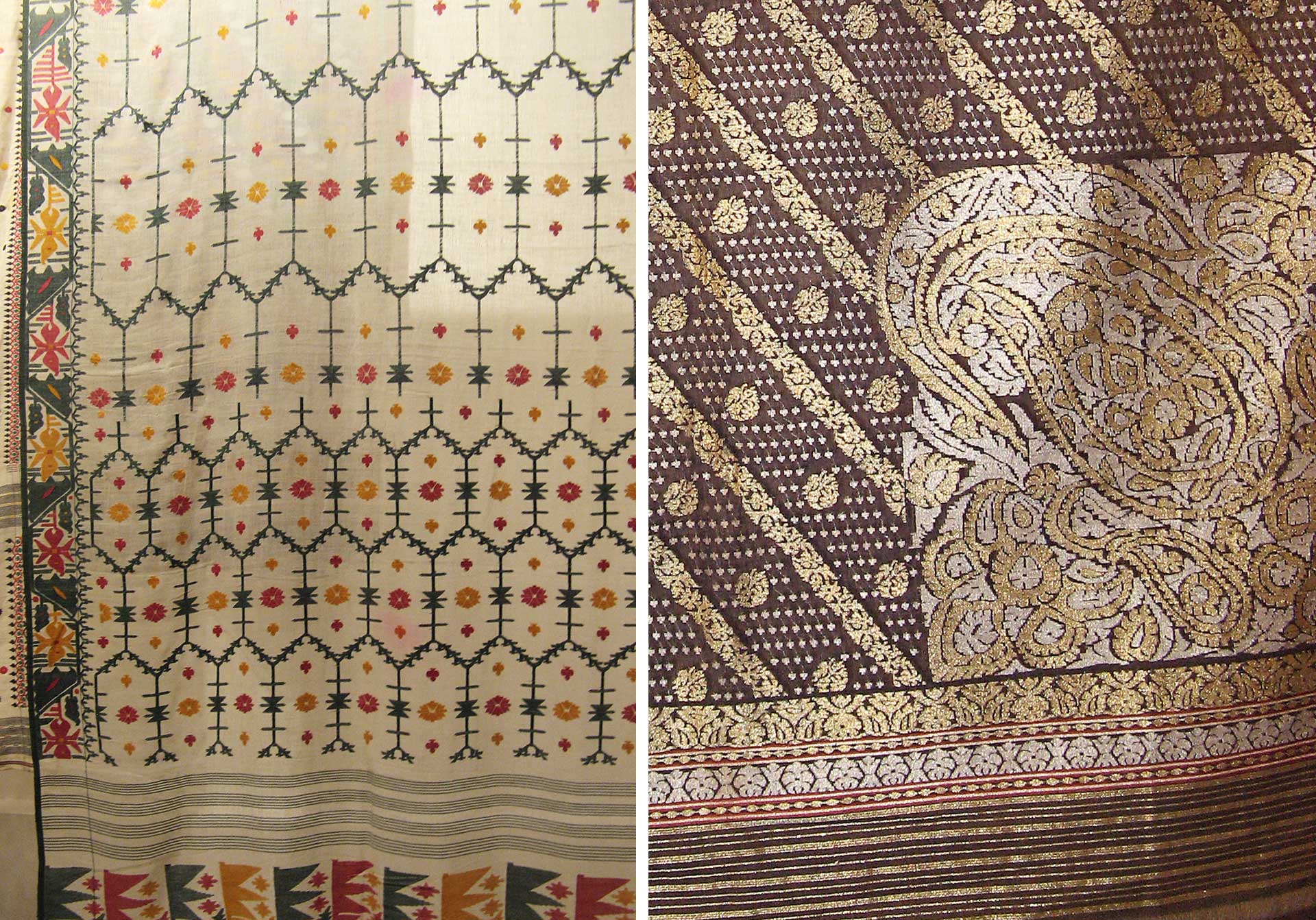
For centuries, jamdani has been celebrated as one of Bengal's most exquisite textile traditions, a fabric that fused artistry with cultural identity [1][2]. Often called "figured muslin" or "loom-embroidered cloth," jamdani is renowned for patterns that seem to float weightlessly on translucent cotton [2][3]. Historically centered in Dhaka's weaving hubs, especially Sonargaon and Rupshi, the craft depended on highly skilled weavers who interlaced motifs by hand [3][4]. Unlike plain muslin, Jamdani was decorated with supplementary wefts, producing motifs known locally as buti, kalka, and phool (flowers), each influenced by Mughal aesthetics and Bengal's natural environment [2][5].
By the Mughal period, jamdani gained recognition as a luxury fabric woven for elites, with sources describing translucent robes embellished with intricate floral patterns worn in imperial courts [1][5][6]. The Mughals promoted jamdani through royal patronage, allowing Bengal's loom clusters to become centers of innovation and creativity [6][7].
Colonial Disruption and the Decline of a Craft
Like Dhaka muslin, jamdani suffered with the advent of colonial-era industrialization. By the late 18th and early 19th centuries, British machine-woven textiles flooded the market, overshadowing handloom fabrics in cost and production speed [3][8]. Colonial trade policies further intensified the decline: Indian handloom textiles were taxed, while imported British cotton entered nearly duty-free, creating an uneven commercial landscape [8][9][10]. As weaving wages fell and industrial yarn became widespread, many jamdani weavers were forced to abandon the craft [11][12]. By the early 1900s, the number of traditional jamdani workshops had dwindled dramatically, and the knowledge of complex motif construction was at risk of disappearing entirely [2][12][13]. Scholars note that jamdani survived largely because a few families continued weaving it despite economic hardship, preserving the techniques through intergenerational memory [2][12].
Renewal of a Craft: From Endangered to Protected
For much of the 20th century, jamdani was regarded as a fragile remnant of Bengal's past, often assumed to be on the brink of extinction [2][13][14]. However, beginning in the 1990s and accelerating in the 2000s, the government of Bangladesh, NGOs, and artisan cooperatives launched targeted revitalization projects. These included training programs, loom upgrades, and documentation of traditional motifs [3][14][15]. In 2013, jamdani was inscribed by UNESCO as an Intangible Cultural Heritage of Humanity, recognizing its artistic significance and the need for safeguarding measures [15][16]. Subsequent initiatives supported design innovation, women weavers' training, and the preservation of weaving villages around Narayanganj and Rupganj [3][16][17].
By the 2010s and early 2020s, jamdani experienced a renaissance. Designers began incorporating jamdani into contemporary fashion, while museums such as the Victoria & Albert Museum and the Bangladesh National Museum showcased historical pieces alongside newly woven saris [5][7][18]. In 2016, the Government of Bangladesh granted Geographical Indication (GI) status to jamdani, formally recognizing it as a cultural product rooted in specific regions and practices [16][19].
Cultural Significance Today
For Bangladesh, jamdani is more than a textile—it's a symbol of resilience, artistry, and identity. The revival of jamdani highlights the artisans' ability to preserve their heritage despite the losses incurred during colonization and industrialization [2][3][16]. Although jamdani remains a labor-intensive and high-cost craft, demand has grown for both traditional and modern styles, with high-quality saris requiring months of work and selling at premium prices [14][17][19].
In a global era dominated by fast fashion, jamdani stands as a counterpoint: a material reminder of how slow craft, intergenerational knowledge, and community-based artistry continue to hold economic, cultural, and emotional value [13][17][20]. Its motifs—whether classic butidar or contemporary geometric reinterpretations—connect present-day makers with a 2,000-year lineage of creativity.
Future of Jamdani
Despite renewed interest, challenges remain. The future of jamdani depends on:
Training new artisans, as mastering supplementary-weft patterning requires years of practice;
Ensuring living wages, so young weavers see a viable livelihood in the tradition;
Access to quality cotton, as modern fibers differ from historical varieties and affect textile fineness;
Sustainable markets, which avoid exploitation and support long-term artisan networks [2][3][14][16][19].
Yet jamdani's revival shows how collaborative efforts between artisans, researchers, policymakers, and global consumers can breathe new life into a nearly lost heritage. Once threatened by industrialization, jamdani now stands as a testament to continuity:
A craft that endured, adapted, and re-emerged, its floating motifs symbolize how culture, even when strained by history, can be rewoven with care [3][16][20].
References
[1] AramcoWorld. (2018). Jamdani: A Living Heritage of Bengal.
[2] Ashmore, S. (2018). Handcraft as Luxury in Bangladesh: Weaving Jamdani in the Twenty-First Century. International Journal of Fashion Studies, 5(2).
[3] Sharmin, F., & Hossain, S. T. (2020). Revitalization of Handloom Communities for Preserving the Craft Heritage of Bangladesh. Urban and Regional Planning, 5(1).
[4] Chatterjee, A. (2019). Textile Traditions of Bengal: Techniques and Community Practice. South Asian Studies Review, 14(2).
[5] Victoria & Albert Museum. (2021). Jamdani Textiles Collection. Retrieved from museum archives.
[6] Eaton, R. (1993). The Rise of Islam and the Bengal Frontier, 1204–1760. University of California Press.
[7] British Museum. (2020). Bengal Textiles: A Curatorial Overview.
[8] Roy, T. (2012). India in the World Economy: From Antiquity to the Present. Cambridge University Press.
[9] Hobsbawm, E. (1969). Industry and Empire. Penguin.
[10] Habib, I. (1998). Essays in Indian History. Tulika.
[11] Ali, S. (2015). The Textile Heritage of Bengal: A Historical Overview. Bangladesh Journal of History, 42(1).
[12] Sultana, N. (2017). The Decline of Handloom Weaving in Colonial Bengal. Journal of Bengal Studies, 9(2).
[13] Ahmed, N. (2020). Jamdani Motifs and Their Evolution. Journal of Design & Culture, 12(3).
[14] NGO Handloom Research Centre. (2019). Artisan Livelihoods in Dhaka's Jamdani Belt. Dhaka.
[15] UNESCO. (2013). Traditional Art of Jamdani Weaving. Intangible Cultural Heritage Lists.
[16] Government of Bangladesh. (2016). Geographical Indication (GI) Registry for Jamdani. Ministry of Industries.
[17] Thread Magazine. (2022). The Revival of Jamdani: Tradition Meets Contemporary Design.
[18] Bangladesh National Museum. (2021). Exhibition on Bengal Weaving Traditions.
[19] Al Jazeera. (2020). Bangladesh's Jamdani Weavers Fight to Preserve a Heritage.
[20] Smith, L. (2021). Craft, Memory, and Modernity in South Asia's Textile Sector. Textile History Review, 33(1).
Thumbnail: https://www.globaltimes.cn/page/202208/1274274.shtml