


That Small Crunch you hear in the Streets of South Asia: Is it Fuchka, Pani Puri, or Golgappa?
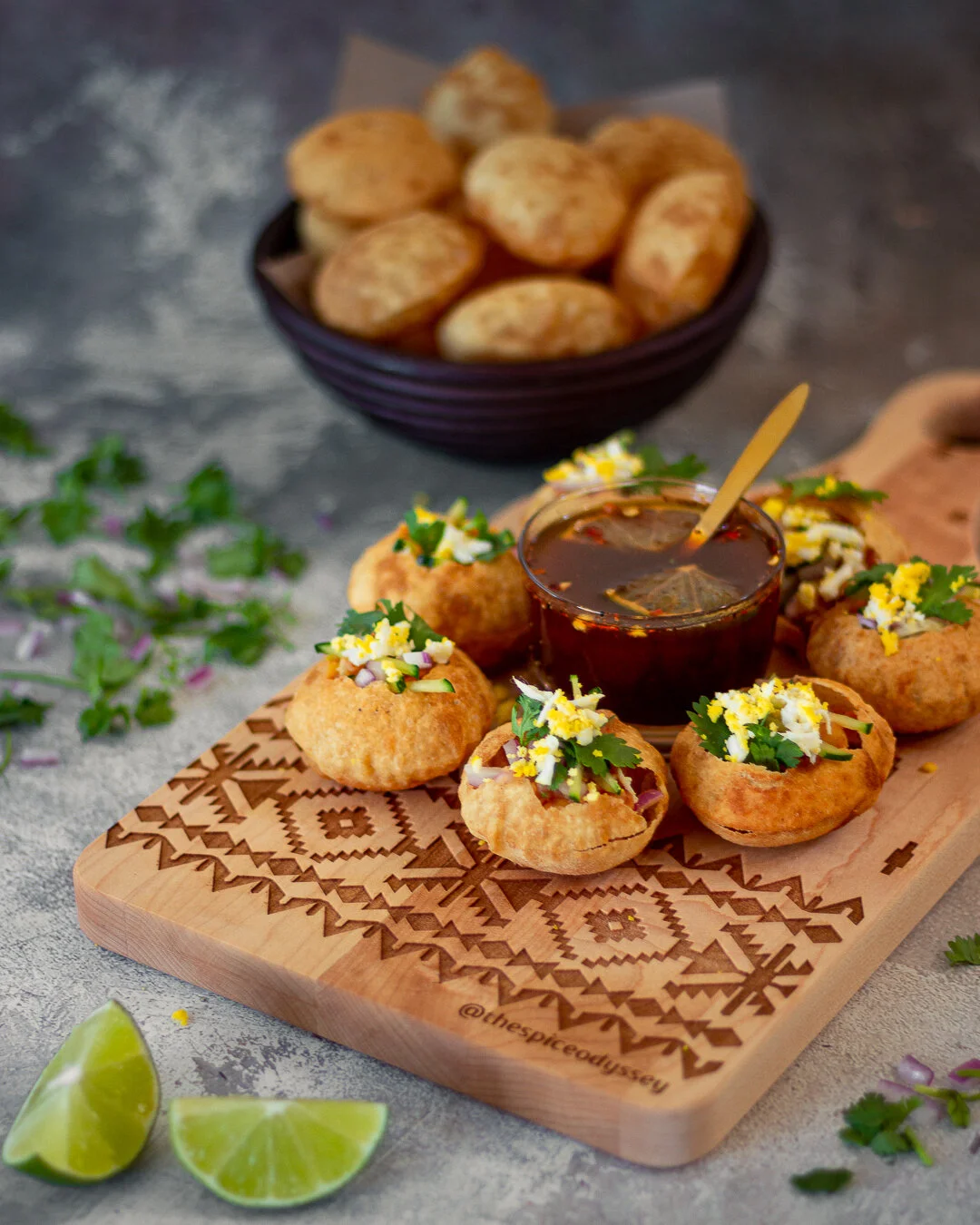
On the streets of South Asia, you will find people munching on a hollow puri that tastes sweet, savory, or even tangy, depending on the filling and flavored water in it. This universal street food is known by different names, such as fuchka, golgappa, or pani puri.[1] The variation in names comes from the migration of people throughout the South Asian continent, as well as differences in regional taste palates and identity.[1]
Key Parts of this Street Snack
The outer layer consists of a hollow, puffy, and crispy shell of dough that is deep-fried.[1] Then, it is filled with a stuffing usually of potatoes, chickpeas, black peas, or other fillings depending on the region in which it's served.[2] Then, pani is added, or flavored water that can be sweet, savory, tangy, or even spicy.[3] Lastly, there is usually an array of condiments that can be added to enhance the flavor of the snack, such as chutneys, onions, and fresh coriander.[1] Each of these components vary based on the region you are in when eating this snack.
Origin Story
There are many speculations, across different sectors, as to how this street snack came about:
Culinary historians believe that this snack is a subsect of chaats, another popular street food in South Asia that includes fried puris, chutneys, and an assortment of condiments that dates back to the Mughal era.[4]
Additionally, a food historian, Kurush Dalal, highlights that this snack was created to make local water attractive to drink by making it flavored with spices to mask any unpleasant flavors.[5]
Furthermore, there are oral folk tales linking its origin to the ancient kingdom of Magadha, or an innovative creation of Draupadi from the Mahabharata, although these are not supported by historical evidence.[6]
Ultimately, since street food was popularized in the 19th and 20th centuries, especially in India, this hollow puri snack dunked in flavored water has become a popular snack of choice.[4][6]
Commonly Cited Regional Variations
|
Name |
Region |
Key Distinctions |
|
Fuchka |
West Bengal & Bangladesh |
Puris are usually larger in size, with a predominantly potato filling and pani is intensely sour due to use of tamarind or occasionally Gondhoraj lime.2,3 It’s less sweet and has more of a kick in flavor. |
|
Pani Puri |
Gujrat, Maharashtra, global, and pan-India |
It’s a mix of sweet, sour, or spicy pani, depending on the consumer’s preference; and, it’s the commonly known version across the South Asian diaspora and non-South Asians.1 |
|
Golgappa |
Northern India |
Puris are smaller in size, with a chickpea filling and often use of mint or sweeter tamarind for the pani.1 |
Bias for the Fuchka
Once you have fuchka, you may not go back to the others. The larger and crispier puri is made from unique blend of flours, and its potato filling makes it a hardier snack, while toppings like boiled eggs make it equivalent to a full meal if you have a few.[2] The intense tangy flavor of the tamarind makes it addictive along with the use of limes to enhance the sourness, making it a unique flavor.[3] Overall, the makeup of the fuchka and service at the stalls that serve it, where they really customize to the consumer's liking, make it a communal favorite.[5]
Furthermore, fuchka has been a widespread feature in Bengali arts and culture, such as in poems, films, and writing, where it's seen as a nostalgic street snack that often instigates memories of growing up.[2] It is also a tool used to raise public health awareness surrounding hygiene and water safety, reflecting the conditions of South Asian street life.[7] In short, fuchka is the bold cousin of golgappa and pani puri, representative of Bengalis' flavor preference for spicy and sour.
Whether you call it fuchka, gol gappa, or pani puri, this street snack both unites and represents the distinctiveness of cultures across South Asia.
References
[1] Encyclopaedia Britannica. (2023). Chaat. Encyclopaedia Britannica.
[2] Indian Express. (2018). Fuchka in Bengal: A Potato-Centric Tradition. Indian Express.
[3] Google Arts & Culture. (2021). Pani Puri / Golgappa / Phuchka. Google Arts & Culture.
[4] Achaya, K. T. (1994). Indian Food: A Historical Companion. Oxford University Press.
[5] Dalal, K. (2019). Gaga for Golgappa: Street-Food, Gender, and Access to Public Space. Gastronomica: The Journal of Critical Food Studies, University of California Press.
[6] Azim Premji University. (2022). Crunch! Slurp! The Story of Pani Puri in India. Azim Premji University Press.
[7] Das, M., et al. (2012). Bacteriology of a Most Popular Street Food (Panipuri). Indian Journal of Medical Microbiology.