

Bangladesh's participation in the world-famous Olympics align heavily with the nations it found itself part of across history. However, its history also tells a larger story on how structural disenfranchisement and oppression significantly affects a nation's performance in an industry we usually consider to be unifying and meritocratic; sport. Through looking at the effects of British colonisation and Pakistani oppression, and a lasting deficit on athletic talent that remains today, the reasons for why Bangladesh is the largest nation to have never won an Olympic medal remains all too evident. Their main participation within the Olympics has primarily been through the wildcard system, which grants athletes from nations typically underrepresented in specific sports to qualify without a traditional, strict qualification process. This article will take a look at a historical timeline of Bangladesh's participation in the Olympics, within different nations and as its own nations, as well as considering the socioeconomic factors developed over time which have limited the success Bangladesh has experienced across one of history's oldest, and most prestigious sporting events.
British India
Bangladesh initially found itself in the 1900 Paris Olympics, where British India, comprising modern-day Bangladesh, Pakistan, Myanmar and India, sent off a lone athlete, Norman Pritchard, from the Bengal Province to win the Empire two silver medals in athletics.
This initial success however is widely debated. Norman Pritchard, an Englishman born and raised in Kolkata, had qualified for the Olympics via a tournament in London, leading many historical experts to argue that his medals should be attributed to Britain rather than British India [1]. At the time, there remained a lack of Olympic committees to register him with, which makes this debated topic unresolved to this day [2]. Nonetheless, British India would go on to win 5 medals, though none came from participants originating from what is now modern Bangladesh.
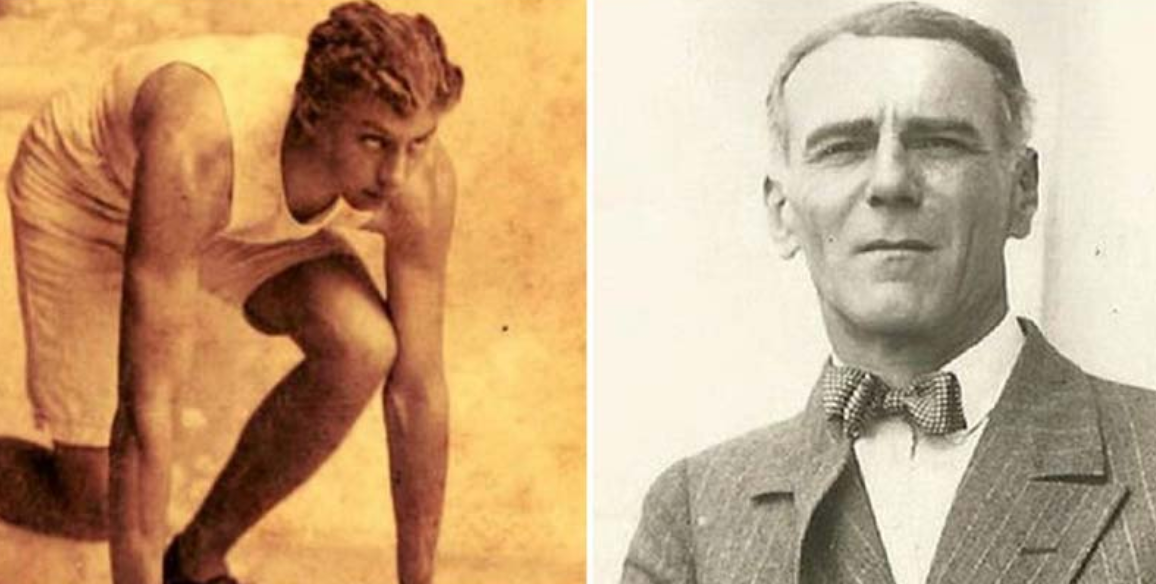
The reasons for this deficit arose from structural inequalities felt across the entirety of the British Raj. Prominent athletes in this era, such as Norman Pritchard or Charles Gmellin [3] originated from the wealthy, British, Calcutta elite rather than the broader local population, which remained the case for all areas of Bengal society, within academia, the arts and the sciences. In times when impoverished athletes did succeed, this was through philanthropy, such as when businessman Sir Dorabji Jamsetji Tata (who would later go on to create the Tata Group) funded an entourage of British Indian athletes in the 1920 Antwerp Olympics, and the 1924 Paris Olympics [4].
United Pakistan
After the split between India and Pakistan in 1947, Bangladesh would continue to contest the Olympics as part of Pakistan, winning 5 Olympic medals [5], though none can be attributed to figures from East Pakistan, or modern-day Bangladesh.
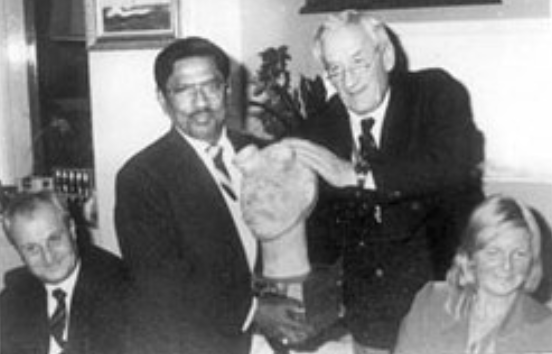
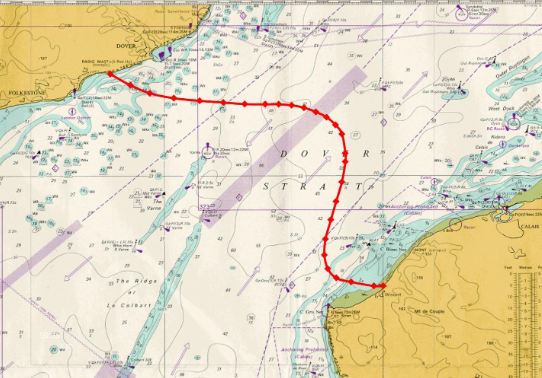
One prominent Bangladeshi athlete who was selected for the 1956 Melbourne Olympics in this entourage was Brojen Das (ব্রজেন দাস) [6], a swimmer from Munshiganj, Dhaka. Swimming in the Buriganga River on the outskirts of Dhaka [7] as a child, Das was selected in 1958 to participate in the English Channel Swimming Competition. This saw Das undertake intensive training in the Mediterranean, where he swam from Capri to Naples [9], as well as 46 miles from Narayanganj (Dhaka) to Chandpur (Chittagong). He would then go on to be the first Asian to swim the English channel in its entirety [8], and would go on further to swim the arduous route a total of 6 times from 1958 to 1961, cementing his legacy as the 'King of the Channel'.
Despite a lack of tangible success, East Pakistan remained influential in specific disciplines such as the long jump, triple jump, and sprints within the Pakistani team when competing within the Olympics.
Many historians note the overall lack of success by East Pakistan in this era to be due to the presence of systematic bias and discrimination that existed between the two polarised nations. Sporting in the country were controlled from Karachi and Lahore, of which executives in these bodies would often discriminate against Bangladeshi athletes, preferring Pakistani ones instead [10]. This was dramatically worsened by the fact that the country's main sporting achievements in field hockey were only popular among West Pakistan, drastically reducing the pipeline into which East Pakistan could fully succeed at the world stage. Beyond sports, structural funding inequalities across East and West Pakistan, where profits from East Pakistan's main foreign exports in Jute were funnelled into West Pakistan [11], causing disproportionate levels of poverty which certainly impacted East Pakistan's sporting abilities, leading to this overall deficit [12].
An independent Bangladesh
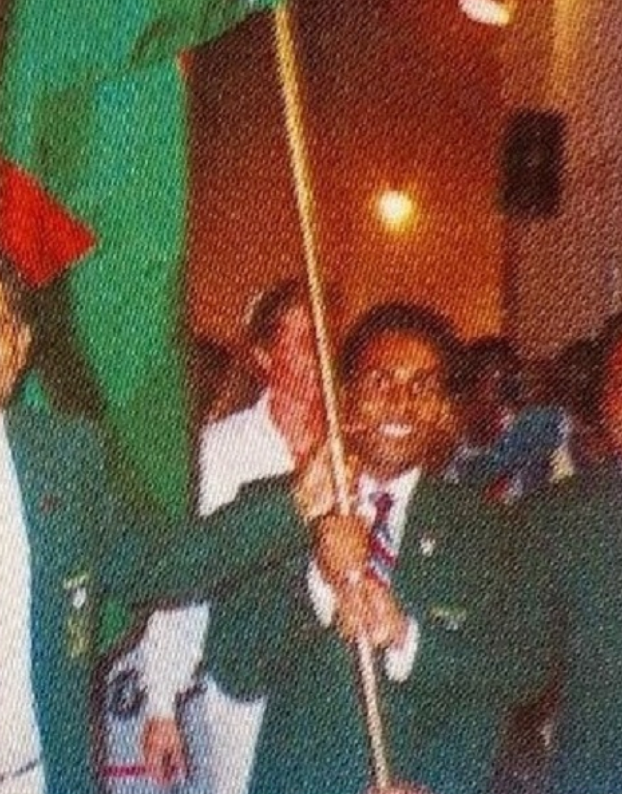
Bangladesh would then go on to contest the Olympics after its independence from Pakistan in 1971. However, this would fail to happen for 13 years, due to the nation's initial priorities in stabilising itself against political chaos, leading to the Bangladesh Olympic Association [13] to be founded 9 years later. After recognition from the IOC in 1980, Bangladesh then refused to compete in the 1980 Moscow Olympics [14] over its participation in the US-led boycott over the USSR's invasion of Afghanistan, making the nation first appear under its own flag in the 1984 LA Olympics [15]. This debut delegation consisted of a single track and field athlete, Saidur Rahman Dawn, who also presided as the nation's flagbearer. Considered 'the fastest man in Bangladesh', Dawn competed in both the 100m and 200m men's races, though failed to advance beyond the preliminary rounds.
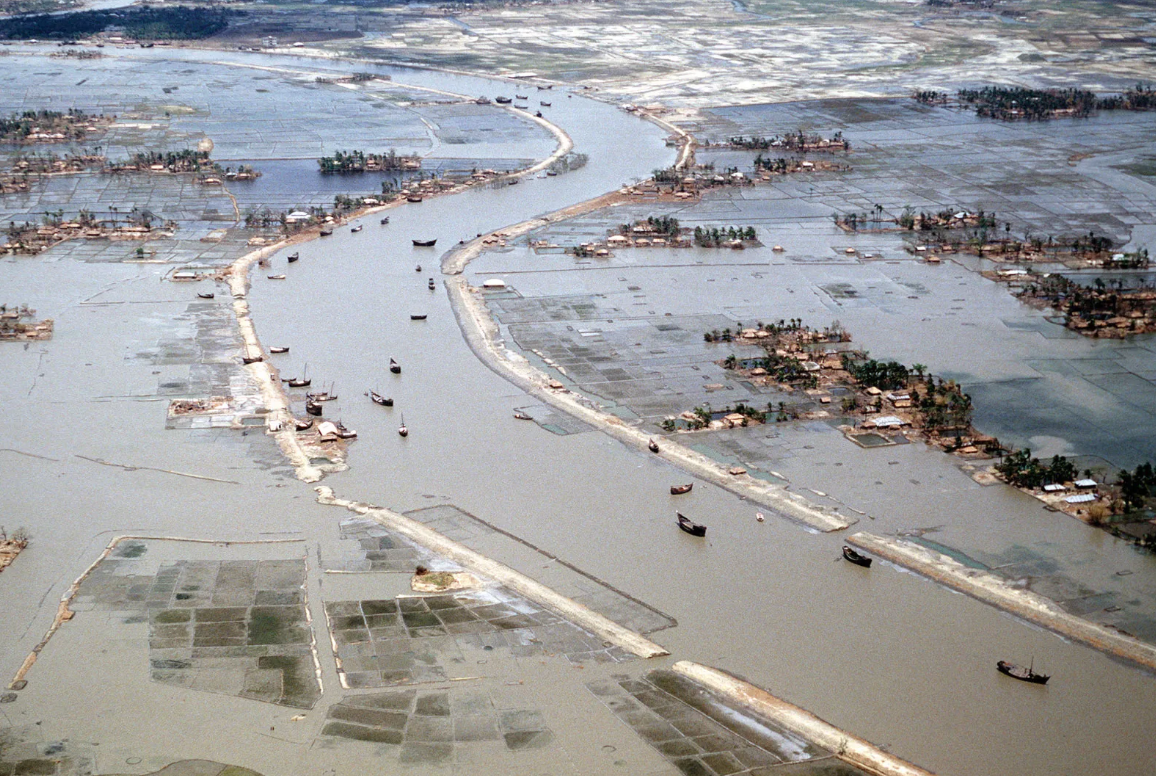
The 1988 Seoul Olympics saw an increase in delegate participation, but also the first signs of limiting factors for Bangladesh at the Olympics [16]. 6 delegates, made of 4 runners and 2 swimmers represented, though none had won medals. The most prominent reason for this was due to the August floods which had taken place just weeks before the opening ceremony, where 66% of the country became submerged underwater and 25 million people were displaced heavily, which was subsequently followed by a major cyclone months later, killing over 5,000 people and destroying 70% of Bangladesh's crops, leading to further devastation and slimming chances at future Olympic games [17].
A further cyclone in August of 1991, which killed 138,000 people and caused 1.7 Billion USD in damages would go on to severely affect Bangladesh's performance in the Barcelona 1992 Olympics [18]. Here, a major diversion of sports funding leading up to the games due to the immense cost of reconstruction now meant that national budgets for supposed "non-essential" sectors such as elite sports training were virtually non-existent. This is worsened by the fact that the cyclone had struck the Chittagong district particularly hard, which previously was the major hub for athletics and swimming talent, from the time of British India to today [19]. Due to these constraints, the government and the Bangladesh Olympic Association had to now focus on 'Operation Sea Angel' rather than the games [20]; one of the largest military relief efforts in history, leading to their 1992 delegation being stuck at the preliminary stage [21].
However, the effects of the disastrous 1991 cyclone extend far beyond Bangladesh's 1992 Olympic performance. A 2026 paper by the Shahjalal University of Science and Technology found that the 1991 cyclone had a "long shadow" effect on upbringing, wherein children who had been exposed to the disaster suffered an average one-year reduction in schooling, as well and significant nutritional deficits, which had evidently decimated the next generation of potential Olympic athletes who may have reached their physical peak in the late 1990s and early 2000s, as seen in a lack of participation beyond preliminary rounds [22].
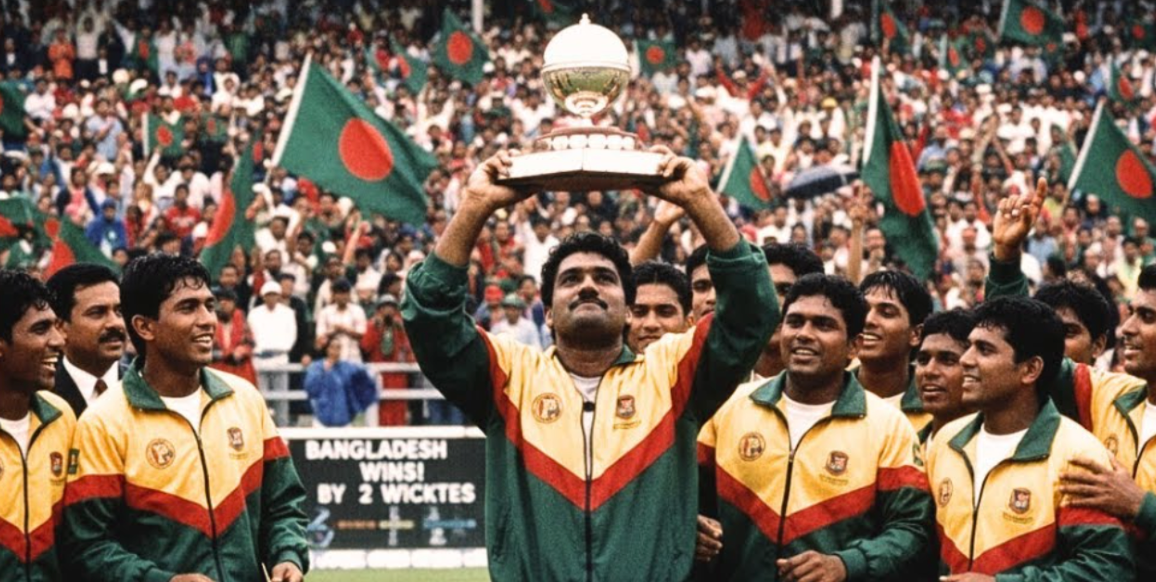
A cultural factor which shifted Bangladesh's involvement in the Olympics was the rise in popularity in cricket. While the sport remained popular since the 18th century, this was amplified when the Bengal Tigers won the 1997 ICC Trophy [23], qualifying for their first Cricket World Cup in 1999 [24], which allowed them to further defeat Scotland and Pakistan. This rise in popularity and success motivated major international sponsorships and governments to focus on further developing skills in cricket, at the expense of 'crowding out' [25] other sport associations. This was particularly detrimental for the Athletics and Swimming associations, which were the primary methods in which Bangladesh gained wildcard access to the Olympics, producing a deviation in their Olympic success.
This streak continued into the 2004 Athens, 2008 Beijing, and 2012 London Olympics where in 2008, the Bangladesh Olympic Association head Wali Ullah attributed its persistent poor results to Bangladesh's weak economy and major corruption within the Government. However, 2016 Rio was a significant turning point for the nation, where it sent its largest yet delegation of 7 athletes, and obtained its first direct achievement. Until this point, athletes only ever entered through wildcards rather than merit, but professional golfer Mohammad Siddikur Rahman (মোহম্মদ সিদ্দিকুর রহমান) had managed to qualify in Golf through conventional Olympic standards rather than a draw. Mohammad Siddikur Rahman is a professional golfer from Dhaka, who had a background in collecting golf balls at the age of nine in the Kurmitola Golf Club [26]. He initially made history in 2010 as the first Bangladeshi to win an Asian tour [27], which led to his growing popularity leading up to 2016.
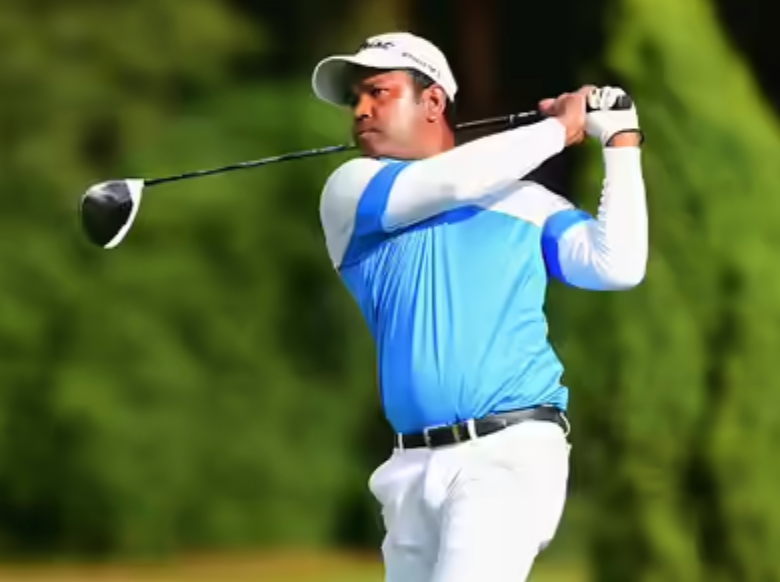
Golf was reintroduced in the Olympics games after having been absent since 1904, and the International Golf Federation announced they would be selecting the top 60 players of the year to compete. In early 2016, Siddikur had dropped out of the top 60 list, before making a dramatic return in May 2016 by finishing second at the AfrAsia Bank Mauritius Open [28], placing him at 56th and securing his historic berth in Rio as Bangladesh's first direct competitor. In Rio, he came 58th, though the legacy left behind in the ability for Bangladesh to compete remains prominent to this day [29].
This was followed by the 2020 Tokyo Olympics, which saw Bangladesh's second direct qualifier. Mohammad Ruman Shana (রোমান সানা) is a Bangladeshi archer from Koyra Upzilla in Khulna, who in his childhood had practised the sport with bamboo sticks and string. His prominence arose in 2019, where at the prestigious World Archery Championships, he won bronze [30], as well as the '2019 Breakthrough Archer of the Year Award' [31]. In the Olympics, he boasted the best-ever performance of any Bangladeshi Olympian ever, having beaten the UK individually, and South Korea in a team, further cementing a growing trend in Bangladesh's ability to directly qualify in sports [32].
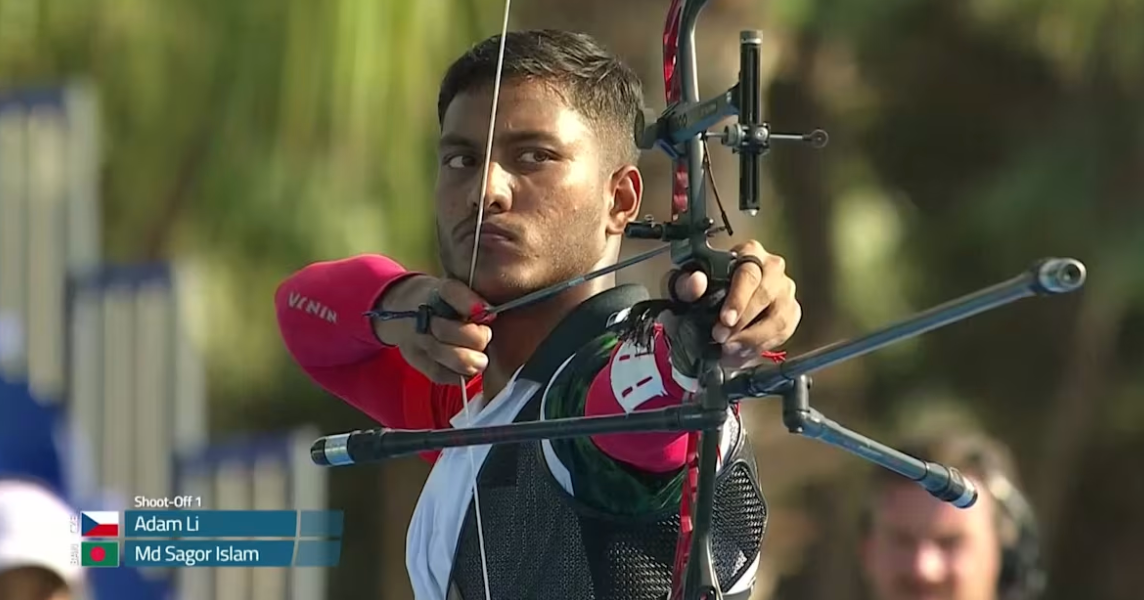
The 2024 Paris Olympics further solidified Bangladesh's chances at archery as means of succeeding [33]. Md Sagor Islam is another professional archer from Choto Bangram, Rajshahi, where in his childhood, his single mother ran a tea after the passing of his father at the age of three. Sagor developed an interest in archery having observed players in a nearby club, and would go on to win silver in the Final World Qualification Tournament for the 2024 Olympics, allowing him to directly qualify at the remarkable age of 18 [34]. He maintained a top-ten score of 30 arrows into the games, though finished at 45th place. Nonetheless, the success of Sagor Islam and Ruman Shana has solidified archery as the main focus for Bangladesh at the Olympics today, where as of 2024, Archery is officially designated as Bangladesh's "Priority-1" Olympic sport, to receive the largest share of non-cricket government funding.
Conclusion
Overall, Bangladesh's performance at the Olympics tells a story of how oppression and disaster can limit a country's participation in an area mistakenly perceived as 'uniting' for the world. Its poor performance under British India and Pakistan due to its sidelined political presence, and its current status as the largest country in the world with no medals due to cultural, environmental and political issues all highlight how sports remains an important opportunity to reflect on the impoverishment in a nation over its history. Despite this, we have observed many fascinating athletes who have risen up from desperate poverty to achieve sporting success, from the first Asian man to swim the channel, to one of the current youngest Archery contenders, all representing Bangladesh. The future of many more direct qualifications and perhaps medals remains bright, and it is important to highlight how Bangladesh is still ripe for development and opportunity.
References
[1] https://www.olympics.com/en/athletes/norman-pritchard
[2] https://theprint.in/sport/was-indias-1st-olympic-medallist-indian-story-of-norman-pritchard-athlete-hollywood-star/1611114/
[3] https://www.teamgb.com/athlete/charles-gmelin/6KvxpYU7TS3HwVry3VjvZM
[4] https://www.peepultree.world/livehistoryindia/story/eras/dorabji-tata-going-for-olympic-gold
[5] https://www.olympics.com/en/news/how-many-pakistan-olympic-medals-won
[6] https://archive.thedailystar.net/magazine/2009/01/01/tribute.htm
[7] https://en.wikipedia.org/wiki/Brojen_Das
[8] www.channelswimmingassociation.com
[9] https://www.openwaterpedia.com/wiki/Brojen_Das
[10] https://www.researchgate.net/publication/393843440_Pakistan's_State_Structure_and_East_and_West_Pakistan's_Disparity_A_Historical_Analysis
[11] https://pu.edu.pk/images/journal/HistoryPStudies/PDF-FILES/Ayyaz%20Gul_v28No1jun2015.pdf
[12] https://www.nuffield.ox.ac.uk/economics/history/Paper63/63asadullah.pdf
[13] https://nocban.org/history
[14] https://en.wikipedia.org/wiki/1980_Summer_Olympics_boycott
[15] https://www.olympedia.org/athletes/65049
[16] https://www.olympedia.org/countries/BAN
[17] https://reliefweb.int/report/bangladesh/bangladesh-cyclone-nov-1988-undro-information-reports-1-6
[18] https://www.britannica.com/event/Bangladesh-cyclone-of-1991
[19] https://www.aoml.noaa.gov/hurricane_blog/25th-anniversary-of-chitagong-cyclone-2/
[20] https://adst.org/2023/06/operation-sea-angel-how-the-gulf-war-saved-bangladesh/
[21] https://hansard.parliament.uk/Commons/1991-11-05/debates/6455d189-682b-473f-9c1e-995896b4f320/Bangladesh(Cyclone)
[22] https://ideas.repec.org/a/eee/wdevel/v200y2026ics0305750x25003729.html
[23] https://www.espncricinfo.com/series/carlsberg-icc-trophy-1996-97-61177
[24] https://www.tbsnews.net/sports/31-may-1999-day-bangladesh-caused-one-biggest-upsets-world-cup-history-253564
[25] https://archive.today/20120709162726/http://english.cri.cn/2886/2008/06/15/53@369141.htm
[26] https://www.golfandbeyondbd.com/index.php/players-profile/2802
[27] https://www.reuters.com/article/sports/golf/siddikur-becomes-first-bangladeshi-winner-on-asian-tour-idUSSGE67001S/
[28] https://afrasiabankmauritiusopen.com/past-champions/
[29] https://www.reuters.com/article/sports/golfer-rahman-first-bangladeshi-to-qualify-for-a-games-idUSKCN0ZS0HQ/
[30] https://www.worldarchery.sport/news/200330/tokyo10-ruman-shana-making-olympic-history-bangladesh
[31] https://oca.asia/news/446-bangladeshi-archer-named-breakthrough-athlete-of-2019.html
[32] https://info.ianseo.net/21_OG/Search/Info.php?Id=202673
[33] https://www.thedailystar.net/sports/more-sports/news/archer-sagor-earns-direct-entry-paris-olympics-3636216
[34] https://www.tbsnews.net/sports/behind-archer-sagor-islams-path-paris-mother-who-endured-it-all-890686